UNIJOINTExpansion Joints & Rubber Products
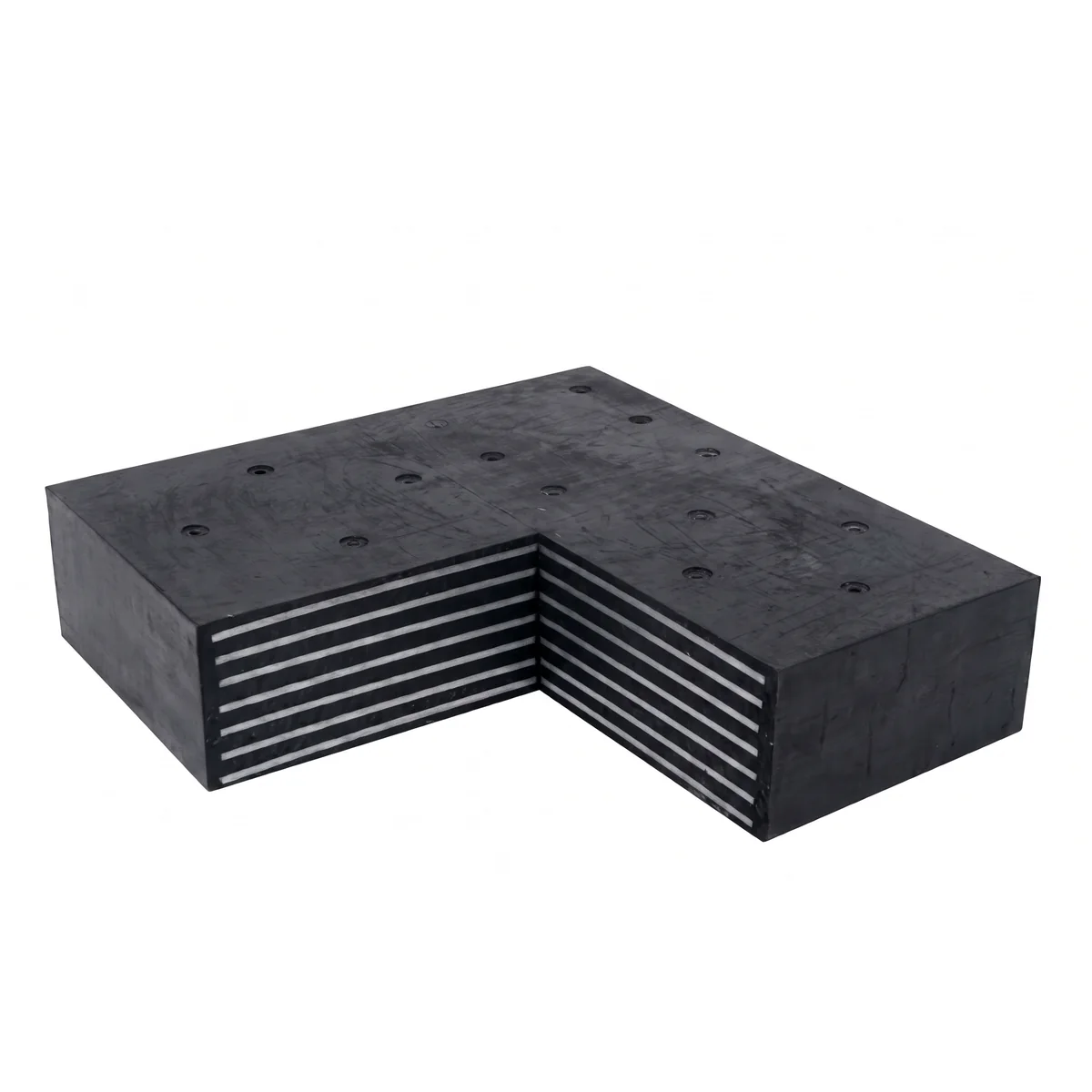
UNIJOINT Rubber BearingSteel Laminated Elastomeric Bearing
Elastomeric bridge bearing
UNIJOINT RUBBER BEARINGS cover a broad range of load capacities and movement allowances, and are manufactured and quality-tested in compliance with BS 5400: Section 9.
- Technical data sheetReadPDF · 2.0 MB
- Drawings & CAD details (4)View & download
- Test report, MSDSOn request
About UNIJOINT Laminated Rubber Bearing
Elastomeric bearings support bridge superstructures while accommodating horizontal thermal expansion, lateral movements and structural rotations. They are an economical alternative to roller, sliding or knuckle bearings, with simpler installation and minimal maintenance.
UNIJOINT RUBBER BEARINGS cover a broad range of load capacities and movement allowances, and are manufactured and quality-tested in compliance with BS 5400: Section 9. Custom sizes and non-standard load ratings are available on request.
Advantages
- Economical alternative to mechanical roller, sliding or knuckle bearings
- Minimal maintenance once installed
- Straightforward placement on site
- Accommodates thermal expansion, lateral movement and rotation
- Standard load capacities or custom sizes and ratings
Where it is used
- Bridge superstructure support
- Highway flyovers and elevated road bridges
- Rail and MRT viaducts
- Heavy civil structural joints
Specifications
From the UNIJOINT Laminated Rubber Bearing technical data sheet. Check the latest TDS for your submittal.
Shortlist a bearing for your load →| Material | Natural Rubber, laminated with steel plates |
|---|---|
| Hardness (BS ISO 48-2) | 60 ± 5 IRHD |
| Shear modulus | 0.9 N/mm² |
| Bulk modulus | 2000 N/mm² |
| Tensile strength (BS ISO 37) | > 25 MPa (BS 5400 requires ≥ 15.5) |
| Elongation at break (BS ISO 37) | > 550 % (requires ≥ 400) |
| Compression set 22 h / 70°C (BS ISO 815-1) | < 28 % (requires ≤ 30) |
| Bond strength rubber to steel (BS ISO 813) | ≥ 8 N/mm, rubber failure (requires ≥ 7) |
| Ozone resistance (BS ISO 1431-1) | No crack |
| After ageing 7 days at 70°C (BS ISO 188) | Tensile and elongation change within 10%; hardness ≤ +5 IRHD |
| Whole bearing tests (BS 5400-9.2, Cl. 7.2) | 400 x 350 x 87 (5 x 3.0 mm plates), 1200 kN: > 450 kN/mm; 700 x 400 x 112 (7 x 4.0 mm plates), 2850 kN: > 1700 kN/mm |
| Design standard | BS 5400: Section 9; values at Serviceability Limit State per BS 5400 Section 9.1 Clause 10.1.4 and MS371 |
| Plan sizes (L x B) | 300 x 150, 230 x 200, 350 x 200, 400 x 280, 400 x 350, 510 x 300, 510 x 400, 600 x 400 mm |
| Overall bearing thickness T | 20 mm to 133.5 mm, depending on part number |
| Inner rubber layer thickness | 6, 9, 12, 15, 18 mm |
| Steel plate thickness | 3 mm (300 x 150 to 400 x 350 series); 4.5 mm (510 x 300 to 600 x 400 series) |
| Cover rubber | Top/bottom 4 mm, side 6 mm (up to 400 x 280 series); top/bottom 6 mm, side 10 mm (400 x 350 series and larger) |
| Part number format | e.g. RBP3015/2/06 = 300 x 150 mm plan, 2 inner rubber layers, 6 mm inner layer |
| Custom sizes | Custom sizes and non-standard load ratings available on request |
Questions about UNIJOINT Laminated Rubber Bearing
What is UNIJOINT Laminated Rubber Bearing used for?
UNIJOINT Laminated Rubber Bearing supports bridge superstructures while accommodating horizontal thermal expansion, lateral movement and rotation. It is used for highway flyovers, elevated road bridges, rail and MRT viaducts and heavy civil structural joints.
What standard is it designed and tested to?
The bearings are manufactured and quality-tested in compliance with BS 5400: Section 9. Catalogue values are based on Serviceability Limit State per BS 5400 Section 9.1 Clause 10.1.4 and MS371, assuming dead load effect equal to live load effect.
What sizes are available?
Standard plan sizes run from 300 x 150 mm up to 600 x 400 mm, with overall thicknesses from 20 mm to 133.5 mm depending on the number and thickness of inner rubber layers. Custom sizes and non-standard load ratings are available on request.
How do I read the part number?
Taking RBP3015/2/06 as an example: RBP3015 is the plan size series (300 x 150 mm), /2 is the number of inner rubber layers, and /06 is the inner rubber layer thickness in mm.
How is the bearing installed?
Set level screws at the required plinth level, form an epoxy mortar plinth extending at least 20 mm beyond each bearing edge, and finish it flat to within ±1 mm with a textured, not glossy, surface. Place the bearing centrally once the plinth has cured, and do not load it until the plinth reaches full strength.
Are test reports available?
Yes. The rubber is tested to BS 5400: Section 9 and whole bearings are tested for compression stiffness at the design load (BS 5400-9.2, Clause 7.2). Custom bearings are tested at their design load, and test reports are available on request.
Drawings & CAD details
4 PDF drawing sheets. Free to download, no sign-up.
Column Head Rubber Bearing Pad
Bridge Highway Joint System – 3D
Bridge Highway Joint System
For illustration only – not for construction. Generic product details, not an engineering design. Sizes, reinforcement and installation to be designed and approved by the project engineer. Refer to the TDS.