UNIJOINTExpansion Joints & Rubber Products
UNIJOINT CRACK INDUCERPVC Crack Inducer for Concrete Slabs
PVC crack inducer for concrete slabs
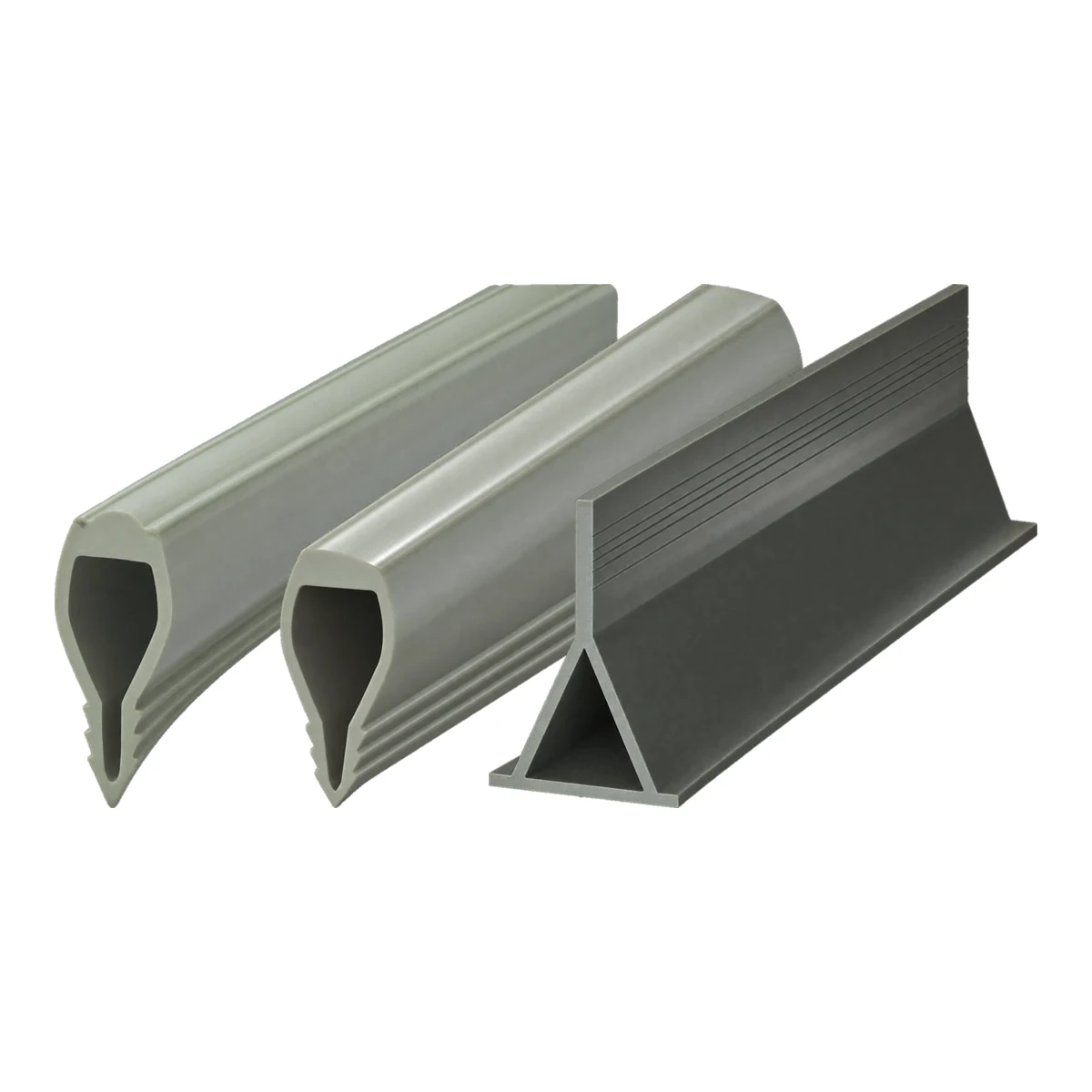
UNIJOINT CRACK INDUCER is an extruded PVC profile that forms a planned contraction joint, so the shrinkage crack runs along a straight line instead of at random. Top types CI-T 30 / CI-T 50 and bottom type CI-B 75.
- Technical data sheetReadPDF · 1.8 MB
- Drawings & CAD details (5)View & download
- Test report, MSDSOn request
About UNIJOINT Crack Inducer
UNIJOINT CRACK INDUCER is an extruded PVC profile used to form a planned contraction joint in a concrete slab. It weakens the slab along a straight line, so that the shrinkage crack forms along the inducer instead of at random.
Two types are available. The top crack inducers CI-T 30 and CI-T 50 are pressed into the fresh concrete along a string line, with the head finished flush with the slab surface; the head is topped with soft grey EPDM. The bottom crack inducer CI-B 75 is set on the lean concrete along the joint line before the pour and is cast into the slab.
Use either a top or a bottom crack inducer at a joint, not both. Crack inducers are not structural expansion joints.
Advantages
- Planned crack line: controls where the shrinkage crack forms
- Top or bottom type: CI-T pressed in from the top, CI-B cast in from the bottom
- Quick to install: CI-T is pressed into fresh concrete along a string line
- Neat finish: CI-T head sits flush, topped with soft grey EPDM
- Barbed tail: CI-T tail grips the concrete
- Light and easy to handle: 2.5 m PVC lengths
Where it is used
- Concrete ground slabs
- Car park and driveway slabs
- Screeds and mortar beds
- Industrial and warehouse floors
- Podium and roof slabs
- Pavements and hardstandings
Specifications
From the UNIJOINT Crack Inducer technical data sheet. Check the latest TDS for your submittal.
| Material | PVC; CI-T head topped with soft grey EPDM |
|---|---|
| CI-T 30 (top) | Light grey, 30 mm high x 9 mm wide, 2.5 m, 50 pcs / box |
| CI-T 50 (top) | Dark grey, 50 mm high x 15 mm wide, 2.5 m, 10 lengths / carton |
| CI-B 75 (bottom) | Dark grey, 75 mm high x 60 mm base, 2.5 m, 10 lengths / carton |
| Inducer height | Not less than one quarter of the slab thickness, unless the consultant directs otherwise |
| Drawing | UR-JT-03 |
Questions about UNIJOINT Crack Inducer
Which crack inducer do I choose?
The top type CI-T 30 or CI-T 50 is pressed into the fresh slab and finishes flush at the surface. The bottom type CI-B 75 sits on the lean concrete and is cast into the slab. Pick the height so it is at least a quarter of the slab thickness, and use only one type at a joint.
How is the top crack inducer installed?
After placing, compacting and levelling the slab, set a string line and press CI-T vertically into the fresh concrete, barbed tail first, until the head is flush. Re-compact the concrete on both sides, check it is straight and level, finish up to it without covering the head, and clean the head before the concrete sets.
How is the bottom crack inducer installed?
Before the pour, stand CI-B 75 upright on the lean concrete along the joint line and hold it with mortar packs on both sides. Place concrete beside it, not onto it, and compact carefully so it stays upright and on line.
How are lengths joined?
Cut square with a fine-tooth saw or sharp knife and butt the lengths tightly end to end so the joint line is continuous. Cut neatly at intersections so the profiles meet without gaps.
Can it replace an expansion joint?
No. Crack inducers form contraction joints only; they are not structural expansion joints.
Guides
Drawings & CAD details
2 PDF drawing sheets and 3 editable CAD details (DXF / DWG). Free to download, no sign-up.
Concrete Joints and Waterproofing – 3D
For illustration only – not for construction. Generic product details, not an engineering design. Sizes, reinforcement and installation to be designed and approved by the project engineer. Refer to the TDS.