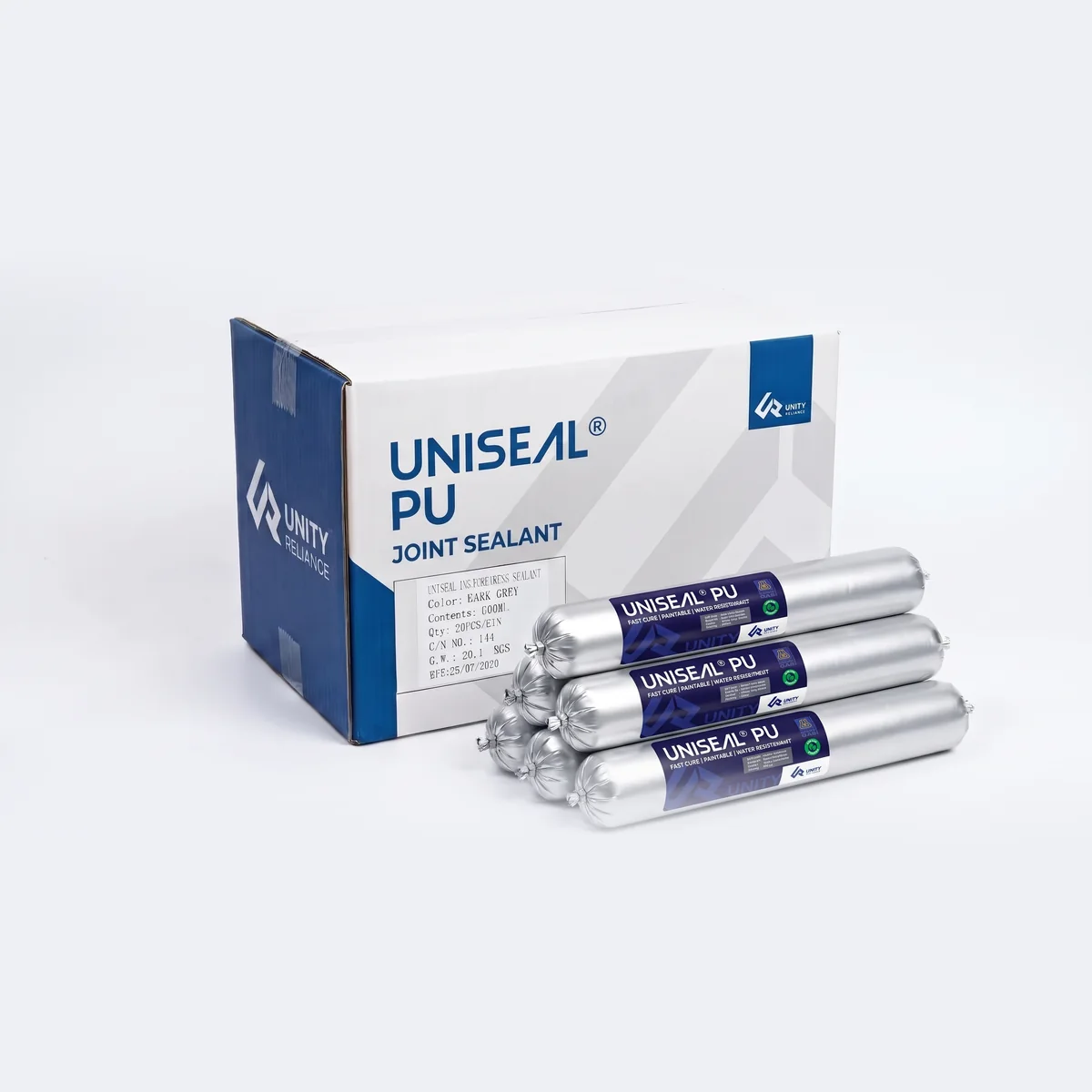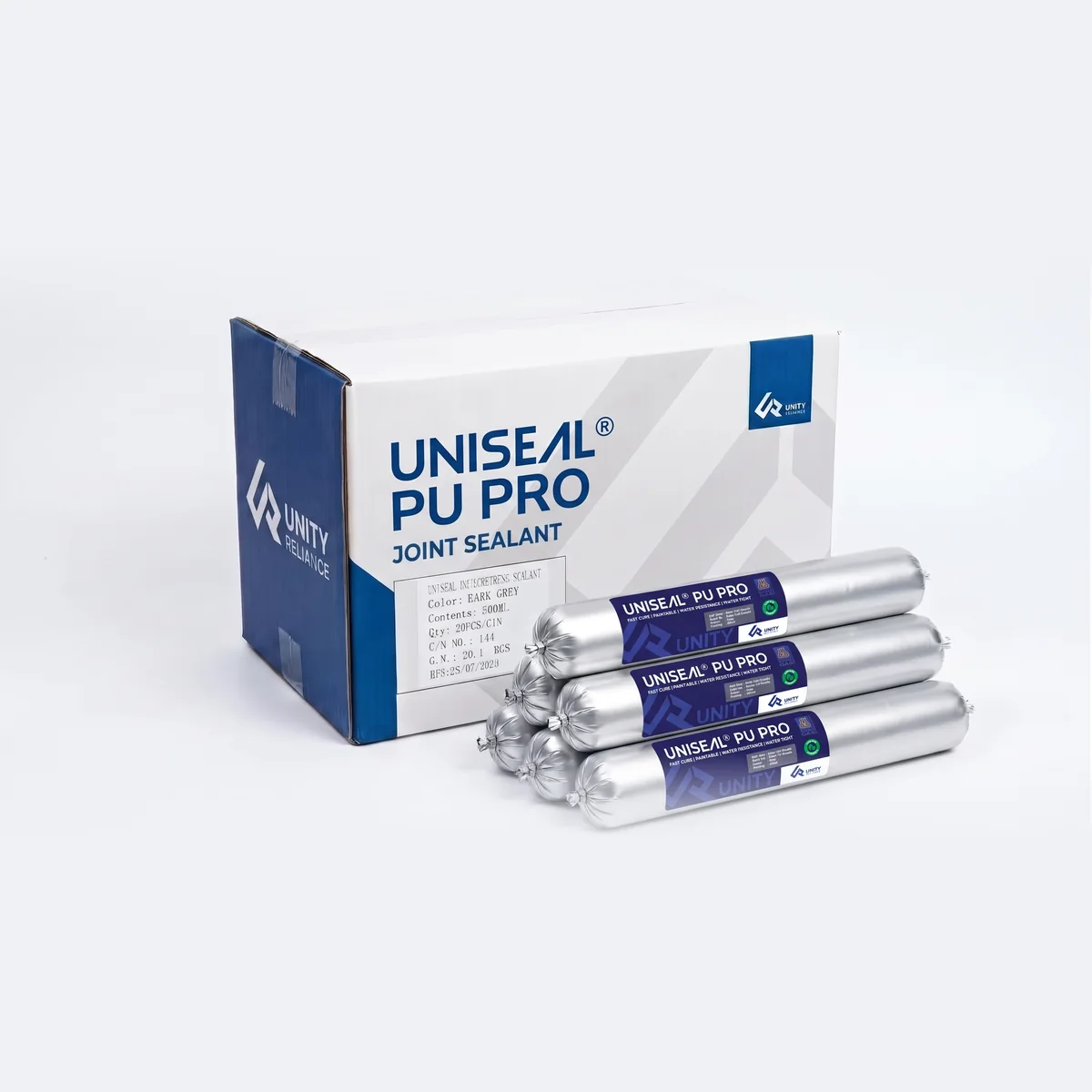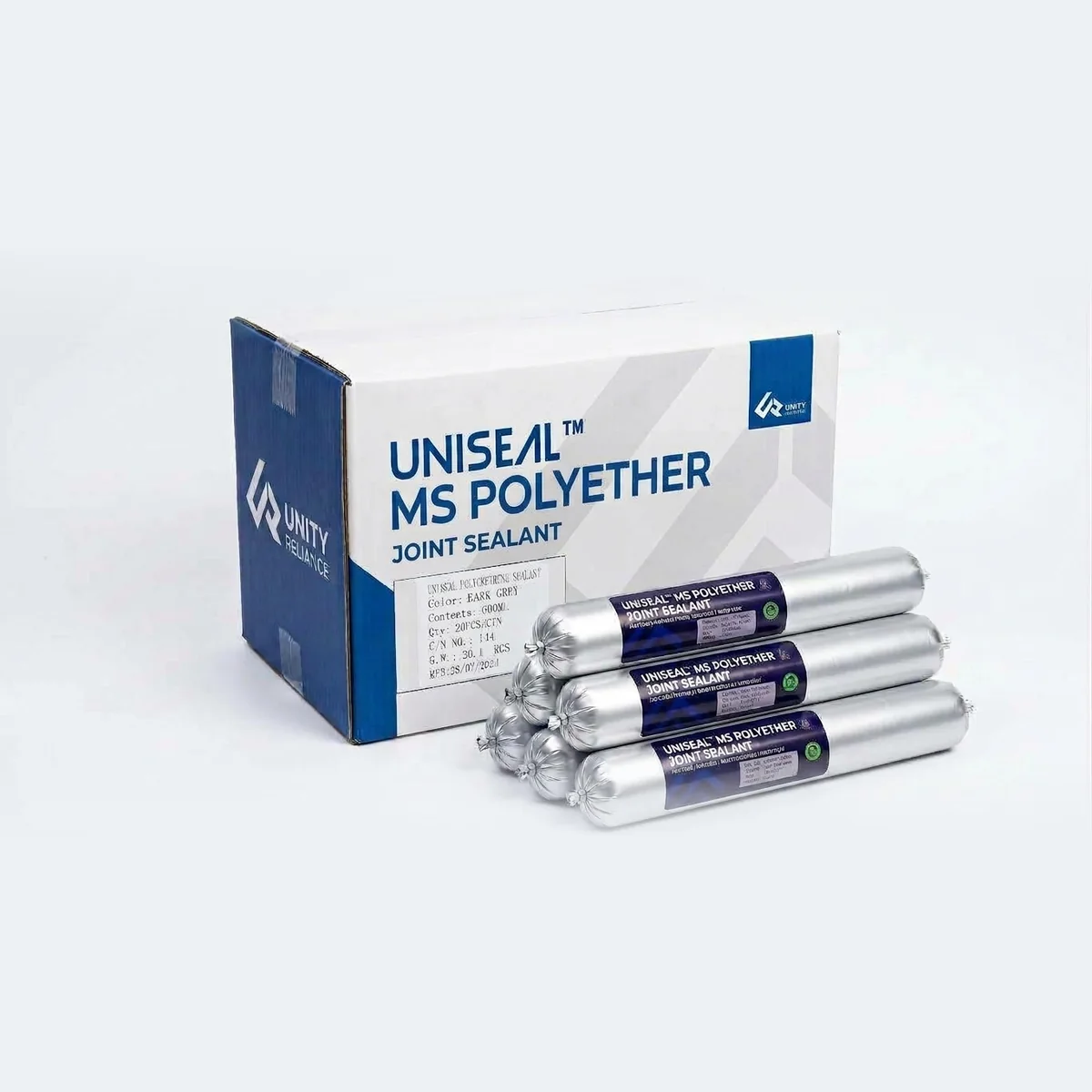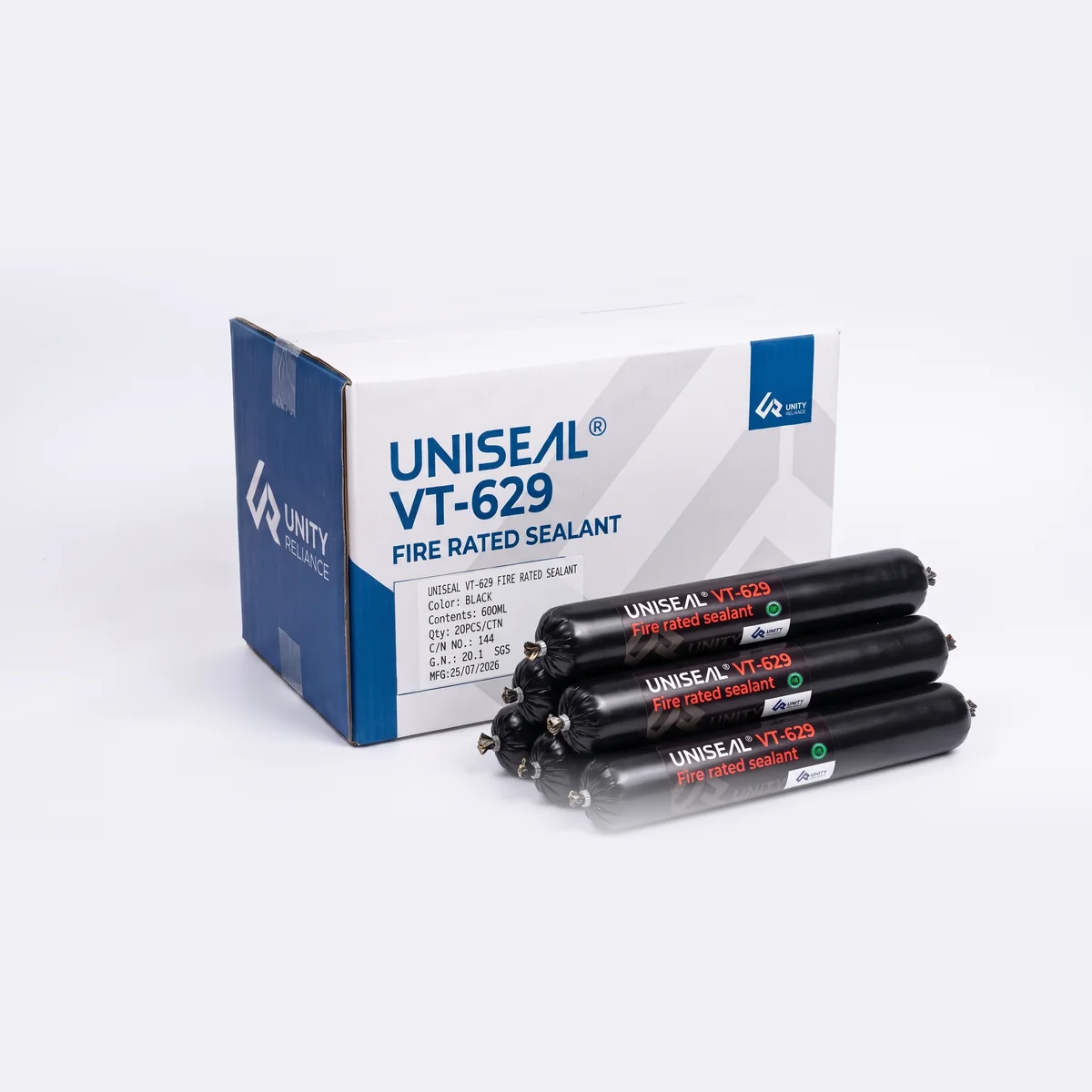
UNISEAL®Joint Sealants
UNISEAL® PSPolysulphide Chemical-Resistant Sealant
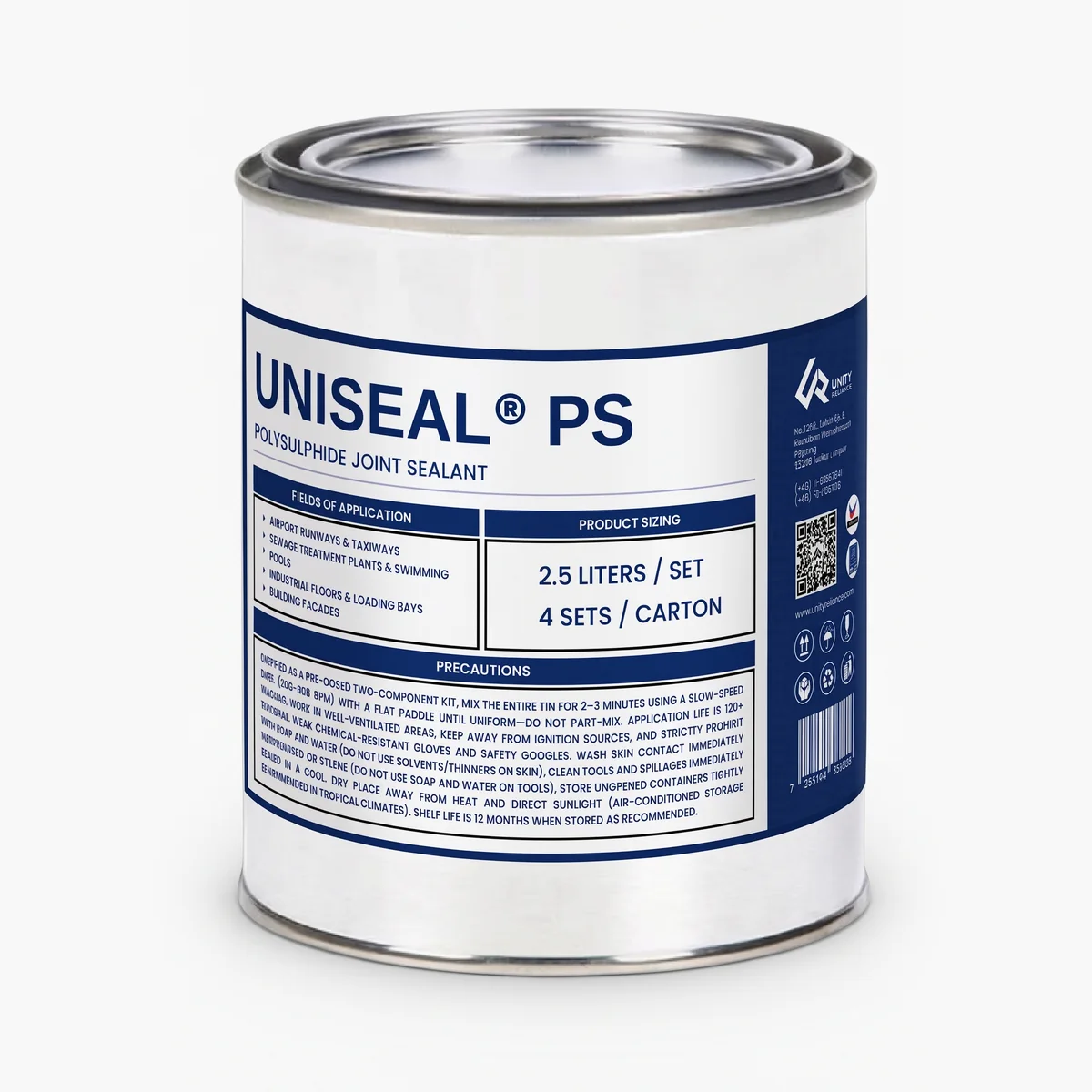
Two-component chemical resistant polysulphide sealant
UNISEAL® PS is a non-slumping, two-component, chemically curing polysulphide joint sealant. Resistant to chemicals, oils and fuels, it is the preferred sealant for sewage treatment plants, chemical plants and oil-exposed joints. MAF ±25%.
- Technical data sheetReadPDF · 2.6 MB
- Drawings & CAD details (5)View & download
- Test report, MSDSOn request
About UNISEAL® PS Polysulphide Sealant
UNISEAL® PS is a non-slumping, two-component, chemically curing polysulphide joint sealant for a watertight seal in moderate-movement and control joints. Based on a liquid polysulphide polymer, it cures after mixing with the hardener to a tough, flexible, non-staining, rubber-like seal.
Its resistance to chemicals, oils and fuels makes it the preferred sealant for sewage treatment plants, chemical plants, oil and gas facilities and any joint exposed to oil or chemicals. It bonds well to concrete, stone, metals and other common substrates and resists deterioration on prolonged UV exposure.
It suits both vertical and horizontal joints, with a movement accommodation factor (MAF) of ±25%.
Advantages
- High elasticity and resilience
- Permanent watertight seal
- Non-staining formulation
- Superior UV and fatigue resistance
- Thermal movement accommodation
- Multi-substrate adhesion
- Long-term ageing resistance
- Chemical and hydrocarbon resistance
- Ideal for sewage, chemical and oil-exposed joints
Where it is used
- Swimming pools
- Factories and warehouses
- Metal and concrete sea walls
- Bridge decks and highway pavements
- Chemical plants
- Airport runways and apron pavements
- Parapet walls
- Sewage and wastewater plants
- Garages and workshops
- Oil and gas plants
Specifications
From the UNISEAL® PS Polysulphide Sealant technical data sheet. Check the latest TDS for your submittal.
Estimate how much you need →| Material | Polysulphide (PS), two-component |
|---|---|
| Colour | Grey |
| Consistency | Thixotropic paste |
| Specific gravity (ASTM D792) | 1.55 ± 0.05 |
| Shrinkage | Negligible |
| Application life | > 120 min |
| Tack free time | 5 hrs |
| Shore A hardness (ASTM D2240) | 20 – 35 |
| Tensile strength at break (ASTM D412) | > 2.0 MPa |
| Elongation at break (ASTM D412) | > 500% |
| Movement accommodation factor | ±25% |
| UV resistance @ 300 hrs | No deterioration |
| Chemical resistance | pH 2.5 – 11.5, hydrocarbon fuels, vegetable oil, urea, seawater |
| Initial / final cure | 24 hours / 7 days |
| Application temperature | +5 to +40°C |
| Service temperature | -20 to +80°C |
| Size & packing | 2.5 litre set, 4 sets per carton; UNISEAL® PRIMER 1 litre tin |
| Shelf life | 12 months unopened, cool and dry |
Questions about UNISEAL® PS Polysulphide Sealant
What chemicals does UNISEAL® PS resist?
Fresh and salt water, dilute acids and alkalis, jet fuel, kerosene, petrol, diesel, crude oil, mineral and hydraulic oils, brake fluid, grease and alcohols are rated excellent in the TDS chart. Concentrated acids and alkalis (above 10%) and chlorinated solvents are moderate to poor; avoid prolonged contact.
How is it mixed?
Mix one complete kit at a time, never part kits, with a slow drill (300 – 400 rpm) and flat paddle for 2 – 3 minutes until the colour is uniform, scraping the sides and base. Load it into a barrel gun with a heavy-duty follower plate.
Do I need primer?
Yes on porous substrates and in immersed joints. Brush UNISEAL® PRIMER on before fitting the backer rod, let it dry 1 – 2 hours, and re-prime if the sealant is not installed within 3 hours.
How should the joint be sized?
Make the joint width at least 4 times the expected movement, with depth not more than the width: 1:1 for joints up to 12 mm and 2:1 for wider joints. Use UNIFLEX® PE Backer Rod 10 – 20% larger than the joint width.
How many metres does one 2.5 litre set do?
About 25 m of a 10 x 10 mm joint, 12.5 m of 20 mm wide x 10 mm deep, or 6.2 m of 20 x 20 mm. Formula: width x depth x length (m) / 1000 = litres.
How long before it can take traffic or water?
Initial cure is about 24 hours and final cure 7 days at standard conditions.
Can it be painted?
Yes, once fully cured, but solvent paints may make it tacky and some coatings may crack with movement, so field-test first.
Guides
Drawings & CAD details
1 PDF drawing sheet and 4 editable CAD details (DXF / DWG). Free to download, no sign-up.
For illustration only – not for construction. Generic product details, not an engineering design. Sizes, reinforcement and installation to be designed and approved by the project engineer. Refer to the TDS.